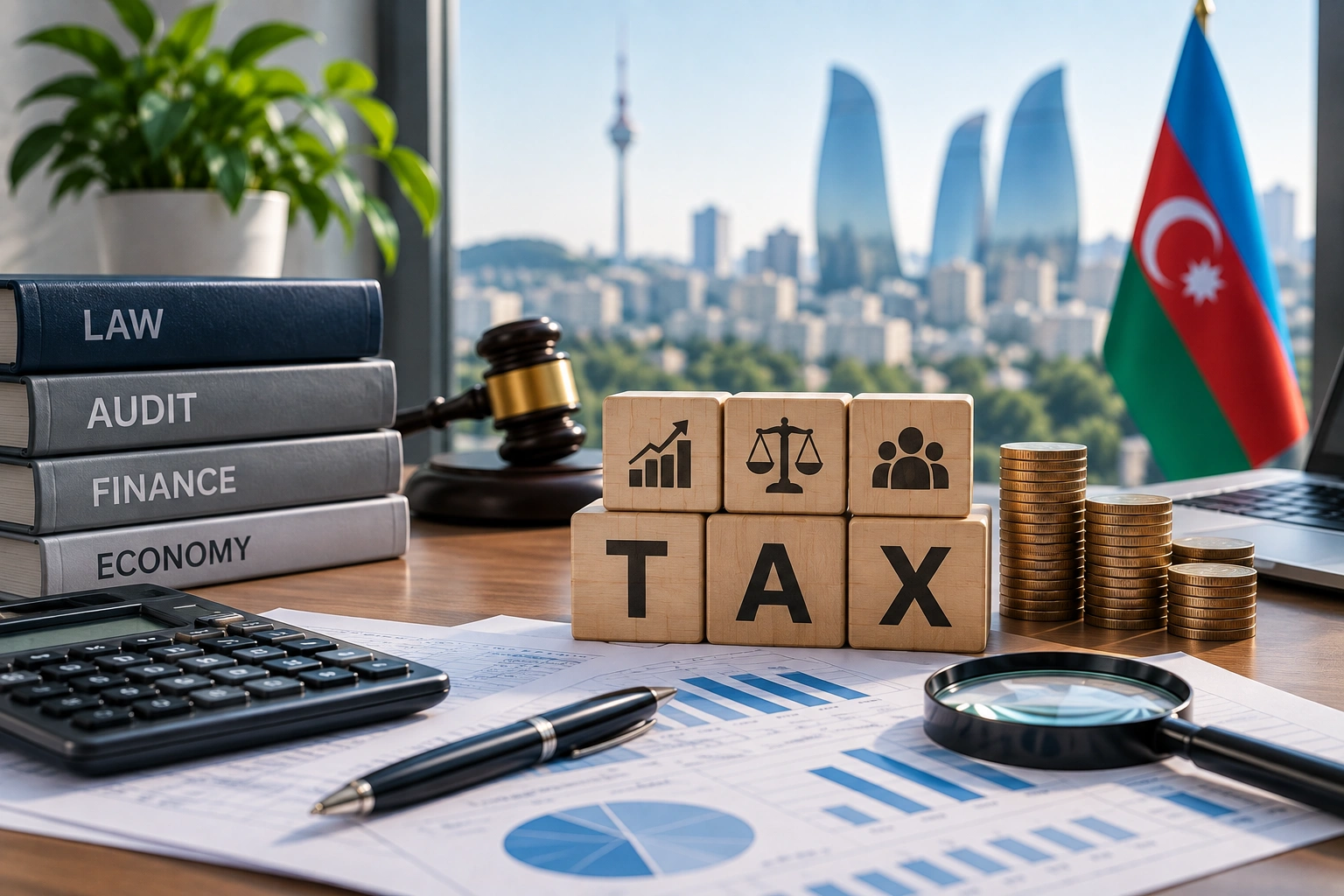
The tax system is one of the main sources of financial stability and public services in every country. In Azerbaijan, tax revenues are also an important source of funding that allows the state to carry out its social and economic functions. However, illegal tax evasion by some individuals and companies can seriously damage the functioning of the system. This article looks at tax evasion risks in Azerbaijan, common forms of tax evasion and ways to prevent such cases.
Tax evasion refers to illegal actions aimed at hiding all or part of the tax that a taxpayer is required to pay to the state or deliberately avoiding payment.
This may include:
Tax revenues play an important role in financing public services and government activities. For this reason, preventing tax evasion risks is an important priority.
Taxpayers should also understand that fulfilling tax obligations and operating legally and transparently contributes to the overall welfare of both the state and society.
Some businesses conduct part of their turnover in cash without recording it officially in order to reduce their tax obligations.
Employees may work without an employment agreement, resulting in unpaid social insurance contributions and other employment-related obligations.
Sales may be recorded at artificially low prices in order to reduce reported income.
Another tax risk may arise when businesses report expenses that do not actually exist or cannot be properly supported by documents.
False purchase and sales documents may be used to artificially increase expenses and reduce taxable profit.
In some cases, companies may transfer income or transactions to offshore jurisdictions in an attempt to avoid taxes.
This includes failing to record income from the sale of goods or services and not reflecting actual turnover and revenue in the accounting records.
Some individuals and companies may attempt to avoid taxes in different ways. This can create legal, economic, management and social risks. Proper risk management can help increase tax revenues for the state while also helping companies avoid financial losses caused by penalties and reduce the risk of legal disputes.
Tax inspections carried out by tax authorities and internal company reviews play an important role in preventing these risks. Depending on the circumstances, tax authorities may conduct desk tax audits, field tax audits or operational tax control measures to assess suspected tax violations and apply the appropriate control procedures.
Companies can also use internal or external audit services to identify tax risks that may arise because of errors, lack of information or incorrect accounting practices.
To reduce possible risks, you can use our audit services
Tax evasion may result in legal liability. The Tax Code and Criminal Code of the Republic of Azerbaijan provide different types of financial and criminal liability for tax violations.
These risks may include:
Tax evasion can also create serious economic risks for a business. These may include:
Tax evasion can also negatively affect the management of a company.
Possible risks include:
Tax evasion can also create wider social problems, including:
Tax evasion may appear to provide short-term financial benefits to a business, but in the long term it creates serious risks for both companies and society. Legal liability, financial losses and social instability can weaken confidence in the tax system. For this reason, paying taxes should be viewed as both a legal obligation and a responsibility of individuals and businesses. At the same time, the state should take appropriate measures to prevent and reduce tax evasion risks.
Measures that taxpayers can take include:
At the state level, measures may include tax education, informing taxpayers about their rights and responsibilities, and creating incentives for taxpayers that operate transparently and comply with the law.
Tax evasion is a serious risk to legal compliance and economic stability in Azerbaijan. It should be addressed not only through penalties, but also through improved tax culture, greater transparency and better awareness. By operating in accordance with the law and managing tax risks properly, businesses can protect themselves from unnecessary legal and financial problems while also contributing to the economic development of the country.


 Türkçe
  Русский
  Azərbaycan